Start with the Bus. Reduce cost with every build.
The current offer is VW Bus only. The goal is mass-market pricing; approximately the first ten may sell at verified per-vehicle cost. The current planning range is about $77,000–$102,000 per early vehicle before one-time development. Battery, generator and integration quotes are still open.
Read the current cost model and price experiment →The programme and model comparisons below are historical background, not additional vehicles currently for sale.
We publish our costs, our margins and our unsolved problems.
Not a summary of them — the actual working documents. The bill of materials with supplier names and prices. The gross margin on a bus. The ranked list of things that could kill this, with the mitigations we do and do not have. The engineering questions still open, marked as open.
Start a conversation.
Everything below is published in full and needs no gate. If you would rather talk, leave an address — or write to us directly.
By signing up, you agree to receive Duet Drive news, offers and reservation updates by email — at most one a month. We never share your address. Unsubscribe in one click. Privacy
Tax, title and delivery are additional.
This is a strategy, not a virtue. Hardware is full of companies whose renderings outrun their engineering, and the only way to distinguish yourself from them is to show work that would be embarrassing to fake. Anyone can publish a number that flatters them. Publishing the ones that do not is the signal.
Pre-revenue, and specific about it.
The engineering and financial documents distinguish projections from measured results. Validation and production economics remain central to the investment case:
- The Ghia engine bay has never been measured with a tape, and every packaging conclusion rests on it.
- The donor battery’s 45 kW continuous rating is unconfirmed — GM never published it. It needs a load bank.
- No shop that is not us has ever installed the kit, so the 12–20 hour install figure is a design target, not an observation.
- The range-extender packaging still misses on one axis by 0.7 in, closed only by a sump that does not exist yet.
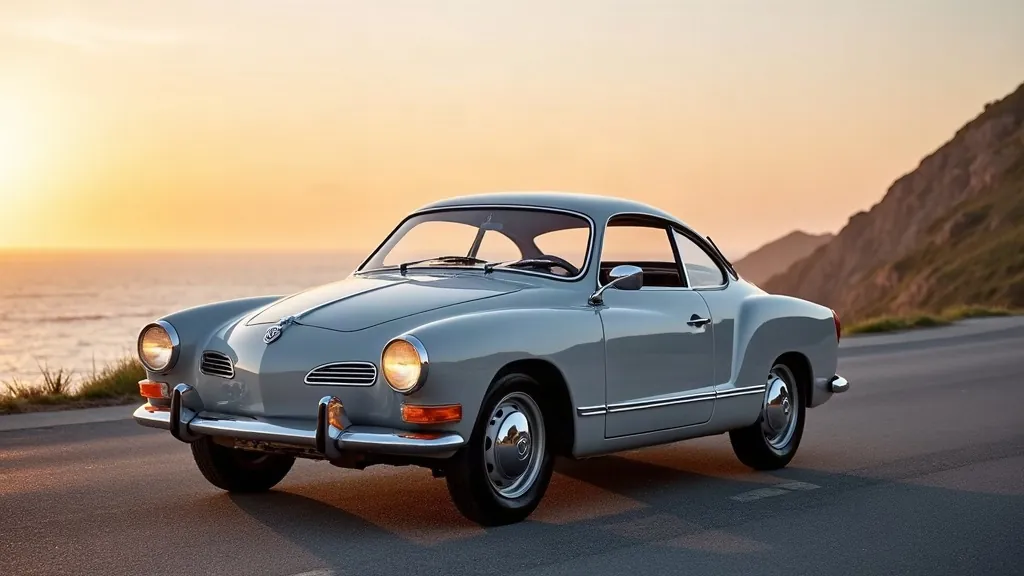
Illustration for reference only. Vehicles are built to order; finish, trim and detail will vary.
Eight stages, ordered by which risk each one retires.
Packaging difficulty and crash-structure difficulty are inversely correlated across the vehicle park: a Karmann Ghia is the tightest package in existence and its powertrain carries no crash load, while a modern unibody is the reverse. So every stage before the seventh works on a vehicle whose powertrain is not a crash structure — and the two revenue stages in the middle fund the two hardest engineering stages at the end.
| Packaging volume | Powertrain as crash structure | |
|---|---|---|
| Karmann Ghia, IRS | worst case | not structural |
| VW Bus, IRS | moderate | not structural |
| Pre-1978 truck, body-on-frame | easy | not structural |
| Modern unibody | easy | worst case |
Proof of concept — Karmann Ghia
Packaging, in the tightest envelope that exists. Battery module, vehicle controller, sensor suite, install protocol.
Proof of concept — Bus
Sustained power and thermal capacity: full highway speed up a long grade, loaded, at altitude. The exact failure that killed the BMW i3 REx.
Completed vehicle salesRevenue
Demand, at a real price, with real deposits — and the only configuration in which we control vehicle condition.
Kit sales — classic VW
Third-party installation. Proves a shop that is not us can fit the kit in the published hours, on a car we did not prepare.
Proof of concept — pre-1978 truck
Driveshaft and 4WD architectures, on a separate ladder frame where the powertrain still is not a crash structure.
Small-scale truck conversionsRevenue
Warranty experience and install economics on the target vehicle class, at manageable exposure.
Proof of concept — modern truck
Everything deliberately deferred: CAN integration, FMVSS preservation, stability-control torque substitution, crash load paths.
The full business
The repair market at volume. Diagnostics, the maintenance layer, the guidance layer.
We pay the engineering once. They pay it on every car.
A bespoke electric conversion takes 200–300 hours at around $190/hr, because the shop never builds the same vehicle twice. That is not installation time — it is engineering, fabrication and debugging, redone from scratch on every single vehicle. We spend it once, then 12–20 hours per vehicle forever. The capital ask is precisely the once.
Stage 3 — a bus, today
| Donor, body, paint, chassis, interior | $42,000 |
| Drivetrain kit, prototype quantity | $49,165 |
| Freight, duty and shop overhead | $7,433 |
| Assembly labour and warranty reserve | $10,500 |
| Cost of goods | $109,098 |
| Base price | $124,000 |
| Gross margin, first vehicles | 12% |
The donor and body lines are half the cost and both depend on an autobody partnership that has not been priced yet.
Tax, title and delivery are additional.
Stage 8 — the market this is really for
| Option | Installed | Economy |
|---|---|---|
| Remanufactured engine | $5,000–7,000 | 16 mpg |
| New crate engine | $7,000–10,000 | 16 mpg |
| Another used truck | ~$34,617 | 19 mpg |
| Duet Powertrain, at volume | $21,900 | 35 mpg |
13 million structurally sound vehicles are scrapped a year in the US. 79,429 independent repair shops already own the customer relationship, which is why acquisition cost is close to nothing.
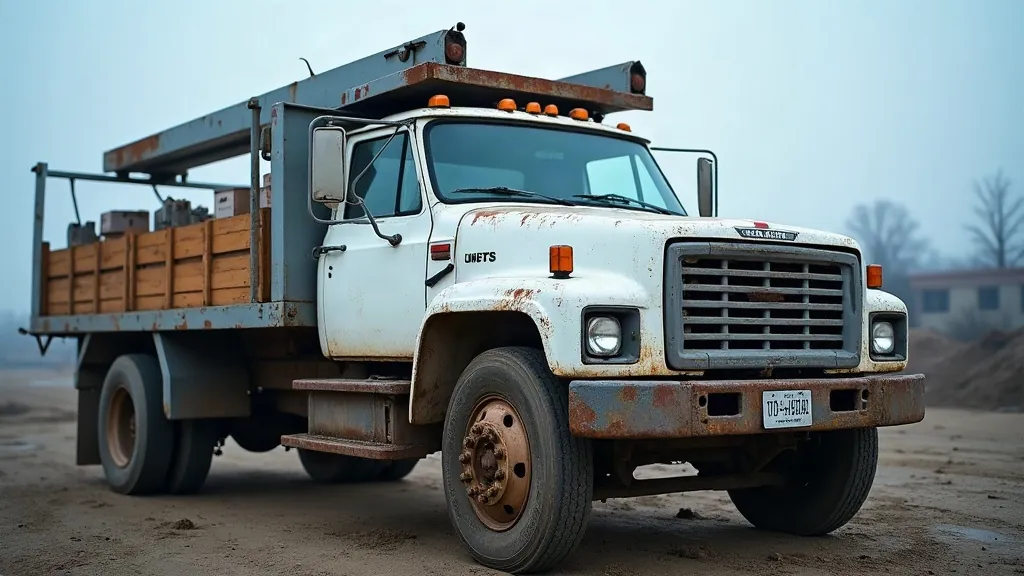
Illustration for reference only. Vehicles are built to order; finish, trim and detail will vary.
The documents.
Rendered straight from the markdown in our repository, so what you read here is exactly the file we work from. Including the one that argues against us.
Business
Current Bus offer, early-build costs and price experiment
Bus-only launch, first-ten-at-cost policy, itemized cost sensitivity and starting-price experiment.
Business Plan
The whole thesis: the powertrain as a module, the EREV argument, unit economics, the eight-stage path, and what destroys the business.
Bus — As-Sold Specification
What a customer actually buys, at the prices actually quoted: the fixed drivetrain, every option and its price, what it costs us to build, and what is still unsettled.
Growth
Market size, the price-anchor problem, what sells the product at each price, the channel, and the cost-down curve.
Risks
What destroys the business, ranked, with mitigations — tariffs, insurance, FMVSS make-inoperative, vehicle condition variance.
Engineering
Powertrain Targets — Ghia, Bus and Towing SUV
Current development targets: 20 kWh non-towing packs, weight and drag assumptions, motor and generator sizing, and calculated Bus EV range.
Technical Architecture
Pod architecture, packaging, battery and generator sizing, component selection and sourcing.
Stage 1 — Ghia Conversion
The complete build document for proof of concept 1. The volumetric floor of the whole programme.
Stage 2 — Bus Conversion
The complete build document for proof of concept 2. The non-towing 20 kWh Bus: six-second acceleration target, 70 mph on a 6% grade, and calculated EV range.
Sensor & BCM Unit Spec
The combined vehicle controller and body control module. Two processors on one board; the safety half cannot be crashed by the apps half.
Forward Sensing Unit Spec
The radar and camera, and the one rule that governs them: nothing takes the driver out of the loop. Adaptive cruise as a torque governor, and why braking is deferred.
Electronics — Silicon, Pins and the Cabin
Exactly which chips, on which pins, and whether it fits. Plus the three cabin systems that were promised and never designed: interior lighting, audio and the phone as the interface.
Boards — Chips, Pins, Power and Programming
Per board: what it does, what is on it, the pin map, fusing, and how you flash it. Deliberately over-provisioned so a mistake costs a firmware change rather than a re-spin.
Wiring — Audit, Master Diagram and Every Connection
What a 1950–80 VW actually has electrically, what the conversion deletes, the master diagram, a connection schedule, the risks and the ways to simplify.
Sourcing
VW Kit — Bill of Materials
41 line items with full option trees and risk ratings. Prototype parts cost, explicitly not a price.
Tesla Drivetrain — Ford / RawSuns Budget
Tesla LDU, Ford EcoBoost and RawSuns generator: core hardware, supporting parts and prototype procurement allowances.
Battery Pack RFQ
Revised draft for 20 kWh high-power packs: 175–190 kW Ghia and 240–260 kW Bus peak discharge, with duty maps and packaging to confirm.
Raising to pay the engineering once.
Leave an address and we will send the deck and set up a call. If you would rather read first, everything above is the whole of it — there is no separate private version.
The assistant in the corner will answer questions from these documents directly, including the awkward ones.